By Katrina Brown, Manager, Grey District Youth Trust
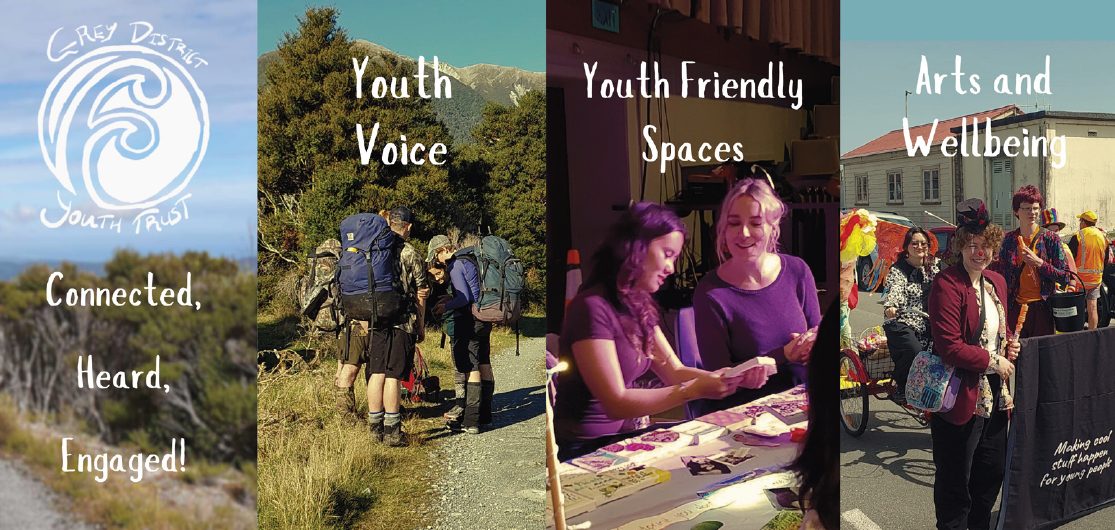
The Grey District Youth Trust (GDYT) is a charitable trust based in Māwhera/ Greymouth, Te Tai o Poutini/West Coast. Established in 2001, GDYT’s vision is “to work creatively with young people (aged 12 to 24) in ways that cultivate connection, growth, positive change, and participation within the Grey District”. I am the manager of the organisation. I work closely with our awesome administrator, Sandra Yeomans, and in collaboration with our Trustees and Chairperson Chris Efford, supporting youth-led programmes under GDYT’s three focus areas; Youth Voice; Youth-Friendly Spaces; and Arts and Wellbeing.
In 2021, we were running a creative programme from spaces we borrowed from other organisations session to session. Four youth participating in our programme applied for and were awarded seed funding from the Ministry of Culture and Heritage, to trial their vision of a youth arts and wellbeing space in Māwhera/Greymouth. This trial was hugely successful and GDYT was determined to support the youth beyond the trial period. We were also hosting the district’s only out-of-school Rainbow Youth Group and it was important to us that we could continue to provide this safe and inclusive space for our rural, neurodivergent, creative, and LGBTQIA+ youth.
By 2024, Art Soup had moved into its third and current space. We were providing regular Open Studio sessions, Rainbow Youth Group, weekly tech, painting, craft and music classes and clubs, a youth-led outdoor group, one-off workshops and events for Pink Shirt Day and Youth Week. Youth were organising community events including an annual Youth Night Market and movie night, and offering activities at events run by Grey District Council. With the programmes and youth participation growing, Sandra and I were determined to support our local youth by helping them secure funding to give some certainty to the future of Art Soup and their awesome mahi.
Sandra and I discovered ANCAD’s LiiFT webinars when searching for funding options. As Sandra says, “There is a LOT of information out there on the interweb and we could spend a LOT of money and time we don’t have attending webinars and training which may not be relevant to our organisation.” There is no way we would have been able to afford travelling to attend so much face-to-face free training in the main centres, or the price of training offered locally.
We both took part in the “become funder-ready” webinar, which helped us to understand the funding environment and got us thinking about how we could strengthen our organisation. It changed the way we apply for funding. Sandra and I were aware that there we needed upskilling to make informed decisions and lift our organisation whilst using best practice to meet our legislative and ethical requirements as a not-for-profit. We, and members of our Board, have attended the majority of the “Governance Matters” webinar series. The accessibility and relevance of the training to our organisation and the clear, concise, and evidence-based information encouraged us to attend as many of the webinars as we could get to. It’s reassuring to have the knowledge from the training to make informed decisions and it’s given us confidence to do so (although it can sometimes be a bit scary, it isn’t overwhelming anymore.)
When one of our youth participants expressed their hope of establishing and leading a regular youth outdoor group, we were keen to support their vision. But this was new territory for us. The Health and Safety training gave us the confidence to branch out into supporting youth to adventure in the outdoors. We were able to advise our board from a position of knowledge gained through the training of their responsibilities and develop processes to identify and mitigate risk. This is now a key programme for GDYT, full of excellent adventures!
Over time, Sandra and I have attended over 20 webinars, some more than once, and we have recommended the Governance training to our Board members. For our younger, least experienced board members it provides accessible free governance training which gets them thinking and for more experienced board members it can fill in some gaps. We have observed our younger board members gaining confidence to have a voice around the Board table. And we have been inspired to engage in further, paid training, scaffolded by this strong foundation of knowledge.
As we have implemented practical suggestions from the LiiFT training, we have grown our own confidence and also strengthened the reputation of our organisation in our community. It has been useful in our roles in a number of community organisations. It has inspired us to speak up more clearly about concerns and reminded us to celebrate the things we do well.