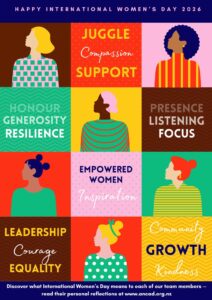
Personal reflections on what International Women’s Day means to our team
Clark Tuagalu
When I think about the theme “Give to Gain,” I don’t think about grand gestures. I think about presence.
I may not always feel like I have a lot to give. But listening matters. Creating space matters. Choosing to understand instead of judge matters.
For me, it starts at home.
It’s giving my wife the freedom to pursue what brings her joy, like horse dressage and showing up when she asks for support. This weekend I’ll be there, not because I have to, but because she matters.
It’s supporting my daughter, like when we raced together while she was 11 weeks pregnant. Her goal wasn’t to compete. It was simply to finish and enjoy the experience. So I shifted my focus. I carried more of the load. I slowed down. I made space for her pace. And it became one of the best days of my life.
That’s what give to gain means to me.
Take the focus off yourself.
Focus on the woman in front of you.
Give your time freely.
Give it generously.
Expect nothing back.
Deb Humphries
Supporting gender equality becomes real when it shows up in everyday behaviour, decisions, and conversations. These examples span personal, workplace, community, and cultural contexts so you can see how it plays out in practice.
Challenging stereotypes in everyday interaction:
- Redirecting assumptions — When someone says “women aren’t good with tech,” respond with something like: “Skill in tech comes from training and interest, not gender.”
- Normalising non‑traditional roles — Encourage boys who enjoy dance or girls who enjoy mechanics by treating those interests as completely ordinary.
Educating yourself and others:
- Learning about gender dynamics — Read books, attend workshops, or follow credible voices on gender equity.
- Teaching young people — Encourage critical thinking about media portrayals, consent, and respectful relationships.
Having a (soon to be 16 year old) daughter creates an increased sense of urgency for me as she is currently making daily decisions about career and relationship pathways.
When we give support collectively we amplify our voices and influence through broader networks and connections – that is pretty powerful
Fiona Brennan
International Women’s Day is a moment to honour our shared humanity and reflect on the deep interconnectedness that shapes our lives. Each of us has been uplifted by the generosity, strength, kindness and example of women who have guided us—often quietly, always profoundly. I remember with deep gratitude the incredible kindness and wisdom shared by the women who have touched my life and continue to influence my personal and professional development.
Today we celebrate the diversity, talent, and skill of the many remarkable women who lead in the workplace, strengthen their communities, empower other women and girls, and contribute to the wellbeing and progress of all. Our strength as women—and as a community—grows when we lift one another up, stand united, and celebrate each other’s successes.
We acknowledge the abundance of creativity, resilience, energy, and inspiration that women bring to our modern world. ANCAD is proud to recognise and honour these contributions, today and every day.
Helen Kerslake-Forbes
As a working mum, International Women’s Day is close to my heart. It’s a time to recognise the everyday juggle so many women live with, and to intentionally show understanding, compassion, and support for each woman’s own path through work and motherhood. When we take the time to support one another, the impact extends well beyond the individual.
Simon Ritchie
International Women’s Day reminds me that strong, sustainable communities are built on inclusive leadership and service. From trailblazers like Whina Cooper, to community advocates and social entrepreneurs such as Dame Julie Chapman, New Zealand women have shown how courage, compassion and conviction strengthen our society.
New Zealand women have long shaped the social fabric of our nation. The theme ‘Give to Gain’ reflects what we see in our own work; when we invest in women’s leadership, create space at decision-making tables, and support capability-building, organisations grow stronger and communities become more resilient. Gender equality is not separate from good governance; it is central to it.